Recruiting Tech Funding Falls to $590M as AI Shifts the Market
Recruiting tech funding sits at $590M against a $3B-plus peak, fraud hits 10–15% in gig roles, and pricing moves to outcomes: ten signals from HR Tech 2026.
Daniel Okafor
· 5 min read
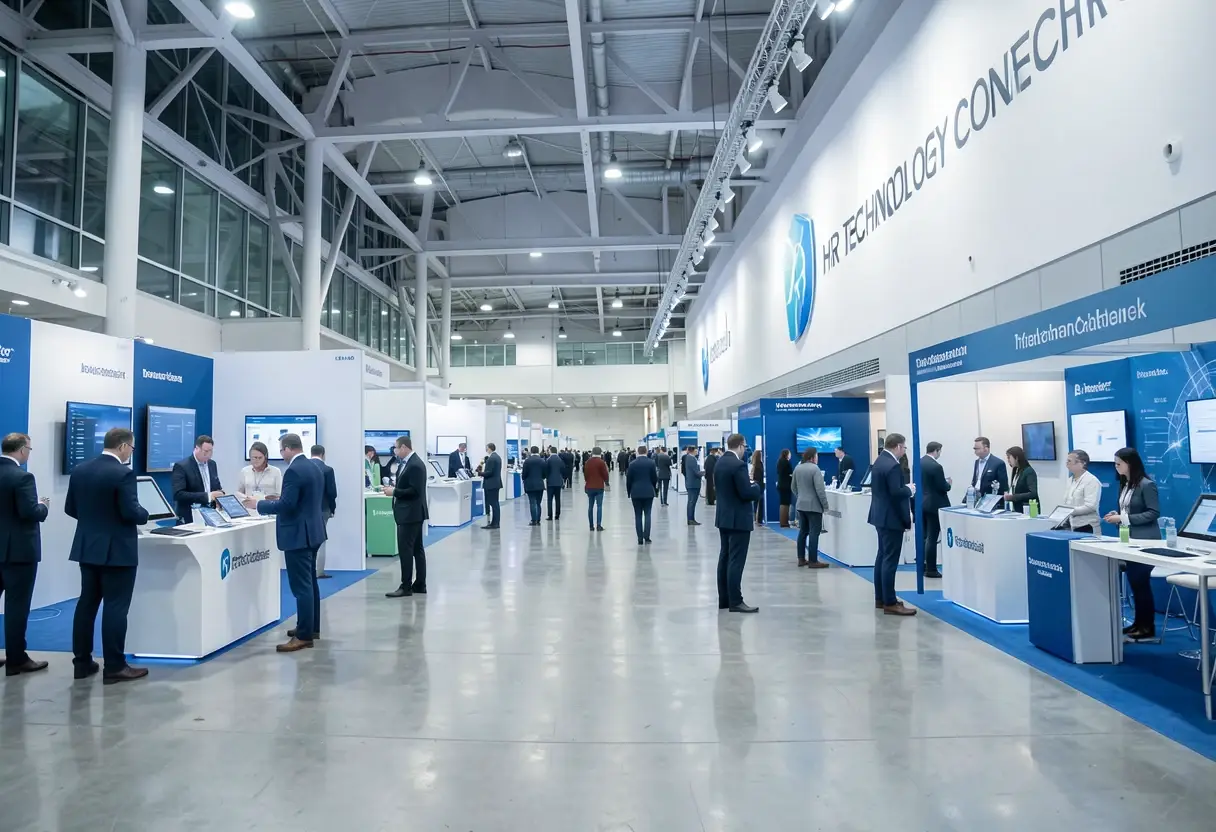
Recruiting technology has drawn roughly $590 million in investment so far this year, against more than $3 billion annually at the 2021–2022 peak, according to George LaRocque, who has tracked HR tech funding for more than nine years. He shared the figure at the HR Tech Conference in Las Vegas, where the broader theme was less a slump than a market repricing itself around generative AI.
Overall HR tech funding has held steady, LaRocque said, landing between $4.8 billion and $6.2 billion every year since 2023. "Roughly $590 million so far, against more than $3 billion a year at the 2021 and 2022 peak," he told attendees and press. "But across nine-plus years of data, that looks like a correction from an outlier, and it's already above 2024's full-year low. Capital is selective, not absent."
What does the money now buy?
The capital flowing into recruiting tech funds new approaches rather than incremental improvements — applying AI and agentic models (software agents that perform multi-step work autonomously) to rethink parts of hiring that were previously aspirational. Last year the show floor talked about agents; this year the products felt differentiated, with stories specific to each company.
A generational line has formed between AI-native products and everything else. One founder claimed his twelve-month-old product beats a three-year-old rival purely for being newer. Take that with salt; still, when a three-year-old product counts as legacy, buyer diligence timelines shrink accordingly.
Is a shakeout coming?
Fama CEO Ben Mones said he had never seen so many bankers and investors in the hall. His explanation: more assets on the market than anyone knows what to do with. Companies that raised money between 2021 and 2024 now have underwater backers and no generative AI story. Discovery, in banking as in software, is the hard part.
Why is data the differentiator?
A year ago, an agent was a product. This year, any competent team can build one in a week, and competition has moved to data. Findem's Hariharan Kolam put it most directly: "An agent is not innovation. What is a real innovation here is three things: context, which is the data around which decisions will be made; a methodology, which is how the work happens; and evidence and verification."
Every vendor sells the same claim in different vocabulary — iCIMS calls it an intelligence layer, Darwinbox a context graph, SAP a foundational data layer. For buyers, this means demos obscure the most important question: what does the product actually know about you?
Has the application funnel broken?
Yes, and visibly. Applications cost nothing to produce, so a candidate — or a bot acting for one — can generate tailored resumes and apply to hundreds of jobs in an afternoon. Terry Terhark of NXTThing RPO, fresh from the Indeed conference, where flooded recruiter inboxes dominated, said: "It's so easy for a candidate to go out and say, tell me the hundred jobs that I matched to, and create a custom resume for each one and apply." An application no longer signals that the candidate knows the role exists.
Fraud follows the same logic. When a plausible application costs nothing, there is no friction between a fake candidate and a real one. Yardstik CEO Andrew Johnson reports fraud rates of 10 to 15 percent in gig and remote roles.
How is pricing changing?
Pricing is moving off seats and tokens because buyers cannot forecast token bills. Darwinbox, the India-based HCM vendor expanding into the US, will announce fixed per-company AI pricing within weeks, scaled to employee count. Ema, which sells "AI employees" and has raised $140 million from Accel, ADP and Workday, charges per block of employee requests. Findem's new ReadySlate product charges per candidate unlocked. The unit of pricing is becoming the outcome, not the compute.
What about transparency and headless systems?
Few vendors mentioned the Workday and Eightfold lawsuits, but the cases are forcing recruiting products to expose at least some of what their black boxes do. Fama's agents trace every decision to a specific line in the customer's own policy, with the audit trail built into the product. Marovi, whose AI-enabled executive search compresses the first weeks into a scored shortlist, opened the same evaluation engine to candidates so an executive can see how they would rate, and why.
Meanwhile, "headless" delivery is becoming table stakes — services usable outside the vendor's own platform. iCIMS put its new hiring agent inside Microsoft Teams, where hiring managers actually work. Findem exposed its entire platform through MCP (Model Context Protocol, an open standard for connecting AI systems to external tools), and Kolam says every customer has some builder project running, from recruiters "vibe-coding" away tedious tasks to a few building their own HR system.
Finally, talent acquisition vendors are quietly trying to become workforce vendors. If structured data about people is the differentiator, the most valuable people to understand are the ones already employed. CodeSignal, historically a hiring-assessment company, is moving into skills intelligence for the existing workforce; Findem rebranded from talent intelligence to people intelligence.
The strongest takeaway from the show was not any single product. It was speed. Pricing models, products and fundamental assumptions about candidates have all changed within a year — and, by every account from the floor, the pace is only accelerating.
Source: ERE Media
More from Daniel Okafor
Show full bio
Senior reporter covering technology and product news in Recruiting and talent acquisition, learning and development at HR Briefing.
216 articles